African Union Champion · 2026–2030
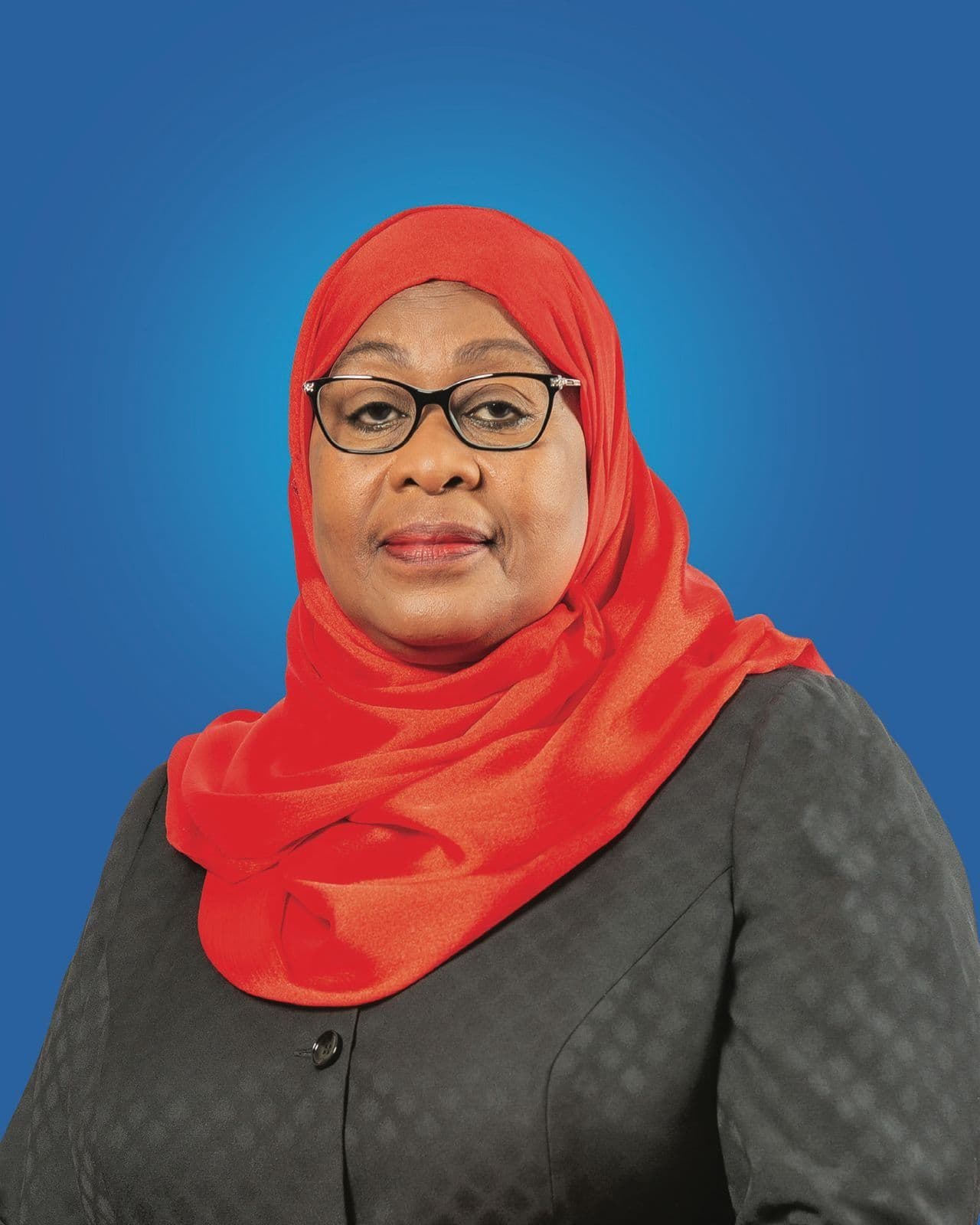
H.E. Dr. Samia
Suluhu Hassan
President of the United Republic of Tanzania. Appointed by the African Union Assembly of Heads of State and Government in February 2026 as Champion for Maternal and Child Health, under Decision AU/Dec.25(XXXIX).
The mandate- 55
- AU Member States participate in the RoadmapDecision AU/Dec.25(XXXIX)
The aim
What the mandate is for
To mobilise high-level political leadership and commitment, domestic and partner financing, implementation support and accountability to accelerate progress in maternal, newborn, child and adolescent health, and advance achievement of SDG 3.1 and SDG 3.2 across African Union Member States.
Support is intensified for countries carrying the highest burden of preventable maternal, newborn and child mortality. All 55 Member States are part of the Roadmap; the difference between them is the intensity and type of support, not participation.
The Roadmap is a political leadership and delivery-acceleration framework, not a new RMNCAH policy or parallel implementation programme. It focuses on where the Champion adds distinctive value: high-level political leadership and convening, accountability, financing alignment and mobilisation, and coordinated implementation oversight.
Guiding principles
Five principles guide every decision
- 01
African leadership, Member State ownership and aligned partnerships
Member States lead national priority-setting, financing and implementation. The Champion provides political leadership and convening power; Africa CDC coordinates continental technical support; partners align behind country-owned priorities and systems.
- 02
Equity-driven and differentiated country support
All 55 Member States are part of the Roadmap, while support is differentiated according to burden, SDG trajectory, service and equity gaps, fragility, conflict and humanitarian disruption, financing and implementation constraints, and country demand and readiness.
- 03
Strengthen existing systems, not parallel structures
The Roadmap builds on national plans, institutions, financing arrangements and coordination mechanisms. Integration reduces avoidable duplication in planning, supervision, information systems and coordination affecting the same frontline services.
- 04
Scale proven, integrated interventions across the continuum of care
Countries are supported to scale high-impact interventions from communities and primary health care through referral services. Integration requires coordinated pathways, information continuity, coherent referral and aligned accountability so that people are not lost between programmes.
- 05
Finance for results, account for delivery and learn continuously
Resources are aligned with national priorities and measurable results, with domestic financing reinforced by catalytic and partner support. Evidence is used to track commitments, trigger corrective action and accelerate the scale-up of what works.
The framework
Three strategic objectives
The Roadmap translates its Theory of Change into three mutually reinforcing objectives, connecting the Champion’s political and convening mandate with the financing, accountability and coordinated technical support required to accelerate country-level results.
- SO-1
Mobilise political leadership and partnerships for improved accountability
Uses the AU MCH Champion’s political leadership and convening power to strengthen accountability and accelerate action on RMNCAH and the Three Zeros.
It focuses on
- 1Sustained high-level political leadership and advocacy for RMNCAH and the Three Zeros
- 2A continental accountability and evidence system anchored in the RMNCAH Scorecard and Dashboard
- 3Recognition and promotion of African-led leadership and innovation
- SO-2
Mobilise and align investment and delivery systems for RMNCAH
Puts in place the financing, products, partnerships and digital systems needed to turn national RMNCAH priorities into implementation.
It focuses on
- 1Turning national priorities into costed, implementation-ready RMNCAH Investment Cases linked to domestic financing and aligned partner support
- 2Ensuring reliable access to priority medicines, vaccines and other lifesaving products through stronger procurement, pooled purchasing and African manufacturing
- 3Advancing PHC digitalisation to strengthen service delivery, referral, supply chains and timely use of data
- SO-3
Accelerate country implementation of high-impact RMNCAH interventions
Provides coordinated technical assistance to countries in need of intensified support to scale proven RMNCAH interventions and sustain them.
It focuses on
- 1Supporting country implementation and scale-up of high-impact RMNCAH interventions across the continuum of care
- 2RMNCAH workforce development, equitable deployment, motivation and retention, with strengthened CHW capacity
- 3Strengthening implementation capacity and South–South learning through a proposed African RMNCAH Centre of Excellence in Tanzania
Governance
Political leadership, oversight and technical support, kept separate
The structure separates political leadership, implementation oversight and technical support while preserving Member State ownership. Member States own and lead national financing and implementation throughout.
| Actor | Role | Purpose |
|---|---|---|
| AU MCH Champion | Political leadership | Provides high-level political leadership; convenes Heads of State and Government; champions RMNCAH and the Three Zeros; mobilises political and financing commitments; promotes peer accountability; and presents progress through relevant AU policy organs. |
| AU MCH Champion Secretariat | Implementation oversight | Based in Tanzania and headed by the Special Adviser to the AU MCH Champion or another senior designate. Prepares and follows up high-level engagements; leads advocacy and strategic communications; tracks political, financing and partner commitments; supports resource mobilisation; oversees Roadmap implementation and performance; and facilitates accountability and follow-up. |
| Africa CDC | Technical coordination | Leads continental technical coordination and implementation support to Member States, leveraging its technical divisions, Regional Coordinating Centres and continental mechanisms for PHC, workforce, financing, digital health, immunisation, product access and procurement. Provides technical leadership for the RMNCAH Financing Accelerator. |
| Government of the United Republic of Tanzania | Institutional home | Provides the institutional home and enabling support for the Secretariat, including engagement across ministries and public institutions, diplomatic and protocol support, administrative arrangements, and liaison with AU institutions and partners. Facilitates establishment of the proposed African RMNCAH Centre of Excellence. |
| African Union Commission | Policy coherence | Provides institutional legitimacy and policy coherence; aligns the Roadmap with Agenda 2063 and relevant AU frameworks including the AU Health Roadmap to 2030 and CARMMA-Plus; and facilitates reporting through appropriate AU policy organs. |
| Member States | Ownership and delivery | Own and lead country implementation. Determine national priorities, integrate Roadmap commitments into national RMNCAH plans and investment frameworks, mobilise domestic resources, coordinate partners through existing national mechanisms, translate priorities into subnational delivery arrangements, implement interventions and report progress. |
| Regional Economic Communities | Regional support | Support regional policy dialogue, contextualisation of continental priorities, peer learning, cross-country collaboration and technical exchange, working alongside Africa CDC’s Regional Coordinating Centres. |
| Development, technical and financing partners | Aligned support | Support country implementation through financing, technical expertise, products, evidence and implementation capacity, aligned with Member State priorities and national mechanisms. Partner commitments and contributions are tracked through the Roadmap’s accountability framework. |
Accountability
From evidence to action to results
A four-step cycle links country performance to technical and political action. Issues are addressed first through national mechanisms; those requiring political action are elevated to the Champion.
- 01
Country validation and action
Member States validate performance, review mortality, service-readiness, financing and implementation bottlenecks, and initiate corrective action through national and subnational systems.
- 02
Africa CDC technical review
Africa CDC, supported by the relevant TWGs and partners, consolidates evidence, reviews implementation and financing gaps, and coordinates technical support and corrective actions.
- 03
Political escalation and engagement
Unresolved barriers requiring high-level political action are elevated through the Secretariat to the AU MCH Champion for political engagement, accountability and resource mobilisation.
- 04
Follow-up and results
Agreed commitments and corrective actions are documented and tracked through subsequent Scorecard and Dashboard reviews, closing the loop from evidence to action to results.
Three Technical Working Groups
Three Technical Working Groups aligned with the Roadmap’s Strategic Objectives provide technical coordination, review progress, identify implementation gaps and recommend corrective action. They meet each quarter jointly to review progress and elevate unresolved strategic bottlenecks for higher-level action.
Independent review
- 2028Mid-Term Review
- Assess implementation, financing, results and constraints and recommend adjustments for the remaining period.
- 2030End-Line Evaluation
- Assess overall performance, results, sustainability and institutionalisation, and inform the post-2030 continental agenda.
Risk management
A live risk register, reviewed at least twice yearly, covers political, financing, implementation, governance, data, partner-alignment, fragility, conflict and humanitarian disruption, supply-chain, equity and reputational risks. Each material risk has an owner, mitigation measures and an escalation trigger.